
The Best Time to Prepare and Take the Digital SAT: A High Schooler’s Guide
Dreaming of attending a top-tier university abroad? A standout Digital SAT score is one of the most powerful assets in your application portfolio.
However, balancing school and Digital SAT Test preparation can feel overwhelming. The secret to scoring 1400+ without burning out is timing your preparation strategically.
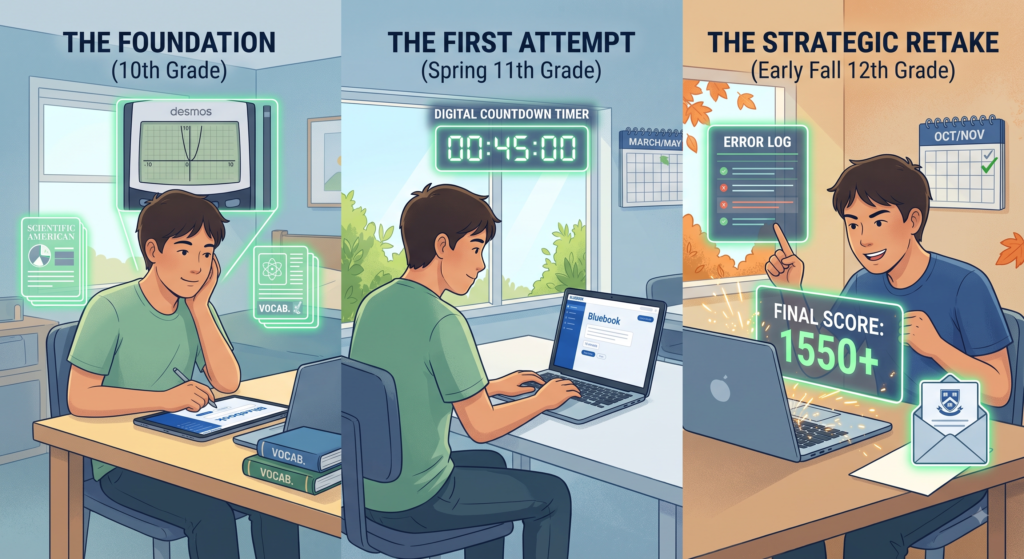
You can build deep subject mastery, reduce exam-day anxiety, and lock in your top score early by picking the right execution window. Here is the ultimate step-by-step Digital SAT preparation timeline mapped out across your high school journey.
Key Takeaway: Spacing out your Digital SAT preparation across 10th and 11th grades allows you to build momentum naturally, leaving your 12th-grade year stress-free for college applications.
Phase 1: The Foundation of the Digital SAT
- Primary Goal: Build core conceptual skills and master the digital testing environment.
- Recommended Commitment: 2 to 3 focused hours per week.
Many students make the mistake of ignoring the Digital SAT until registration is just weeks away. The most successful test-takers start during Grade 10 or at the start of Grade 11. Starting early turns preparation into a low-stress habit. Instead of cramming six hours every weekend under intense pressure, you get to digest high-yield concepts in highly manageable sessions.
Core Focus Areas:
- Take a Diagnostic Baseline Test: Download the official Bluebook™ app by the College Board and complete a full practice test. Don’t sweat your initial score; this baseline acts as your blueprint. This score shows you precisely which question types need target practice.
- Master the Built-in Desmos Calculator: The Math section of the Digital SAT permits a graphing calculator for all questions, and the embedded Desmos tool is a game-changer. Learning how to input equations, functions, and system intersections directly into Desmos can save you crucial seconds per problem.
- Build High-Level Reading Stamina: The Digital SAT uses short, dense academic passages for Reading and Writing. Spend 15 minutes daily reading analytical articles from publications such as Scientific American or BBC News to master complex sentence structures and advanced vocabulary comfortably.
Want to fast-track this phase? Contact us to work with an expert tutor during your foundation stage, which helps you master Desmos shortcuts and reading strategies in half the time.
Phase 2: The First Official Attempt of Digital SAT
- Primary Goal: Secure a strong baseline score under real testing conditions.
- Target Test Windows: March, May, or June.
Spring of your junior year is the absolute sweet spot for your first official test attempt. By this point, your school curriculum has naturally covered the core algebra, advanced math, geometry, and grammar rules featured on the exam.
Why This Timing Works Best:
- Zero Senior Application Stress: Taking your first official test in the spring keeps your schedule clear before college essays, recommendation requests, and application deadlines peak in the fall.
- Real Testing Experience: Sitting in an official test center under timed conditions gives you an accurate assessment of your pacing, focus, and test-day endurance.
SEE ALSO: The Global Impact of the SAT: 3 Powerful Ways to Maximize Your Score
Phase 3: The Strategic Retake of a Digital SAT
- Primary Goal: Target weak spots, eliminate careless mistakes, and reach your maximum target score.
- Target Test Windows: October or November.
Did you know that roughly two-thirds of students raise their scores on their second attempt? Never treat your first attempt as the ceiling. Use the start of senior year to launch a targeted, high-precision review aimed directly at the question patterns that cost you points in the spring.
The Winning Blueprint for a Score Jump:
- Maintain an Error Log: Analyze your official score breakdown and Bluebook practice test analytics. Categorize every missed question—were they caused by calculation slip-ups, misreading prompts, or forgotten grammar rules? Systematically eliminate those specific weaknesses.
- Build a Secure Application Buffer: Booking your retake for October or November ensures score reports are processed and delivered well ahead of Early Decision (ED) and Regular Decision (RD) application deadlines.
The Hidden Risk of the “Last-Minute” Strategy
Delaying your first Digital SAT attempt until the middle or end of 12th grade is a high-risk strategy that often backfires.
By senior year, your mental focus should be dedicated to writing compelling personal statements, collecting teacher recommendations, requesting transcripts, and maintaining your GPA. Adding a high-stakes test to that workload creates unnecessary pressure and leads to burnout.
Lock In Your Strategy Today
Think of your study abroad journey as a marathon, not a sprint. By starting your preparation early, you keep stress low, retain key concepts better, and enter senior year with your target score already secured.
Ready to maximize your Digital SAT score? Whether you need a personalized study plan, Desmos math techniques, or expert diagnostic analysis, our structured test prep programs are designed to help you achieve your dream score efficiently.