

University admissions season is often imagined as a finish line. Students spend months preparing applications, writing essays, taking standardized tests, and waiting anxiously for results. Then the decisions arrive, and suddenly, emotions take over.
Some students celebrate acceptance letters. Others face waitlists. Many receive rejections they never expected. For international students and study abroad applicants, the uncertainty can feel even more overwhelming. But university admission decisions are not the end of the journey. They are simply a turning point. Whether you received an acceptance, a waitlist notification, or a rejection on your university admission, here is how you can move forward with clarity instead of panic.
Inside, you will find:
Let’s begin.
See also: The Global Impact of the SAT: 3 Powerful Ways to Maximize Your Score
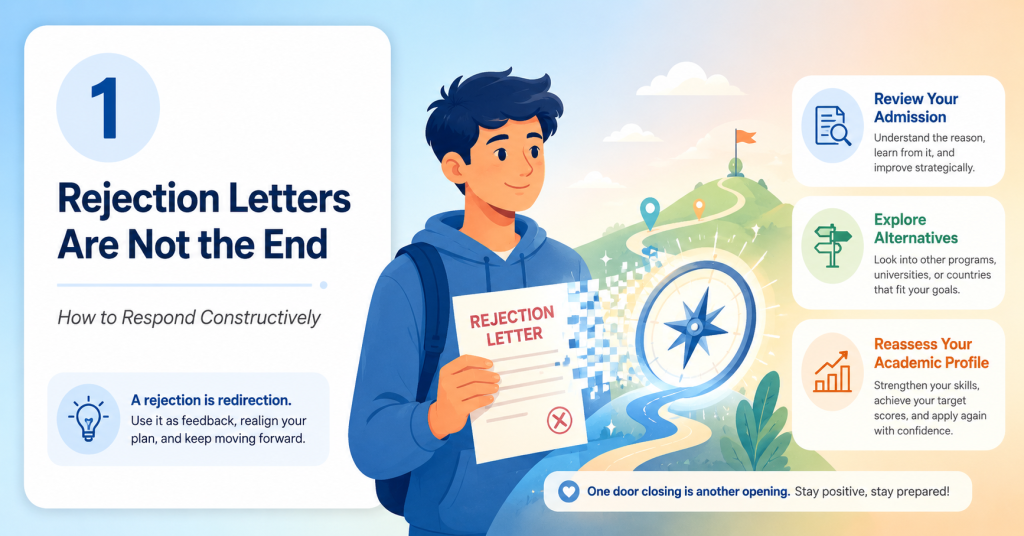
Rejection Letters Are Not the End – How to Respond Constructively
Receiving a rejection letter can be disappointing, especially after spending months preparing applications, essays, test scores, and documents. In the university admissions process, many students see rejection as failure. In reality, it is often part of a highly competitive system.
University admissions are influenced by many factors beyond grades, such as program capacity, scholarship availability, application volume, and institutional priorities. This means strong applicants can still receive rejection results.
Instead of focusing on “Why was I rejected?”, try asking “What can I improve for the next opportunity?”
After receiving rejection results, students can take several constructive steps:
- Review their university admissions strategy and ensure there is a balance between reach, match, and safety universities.
- Reassess academic profiles, essays, and standardized test scores.
- Explore alternative pathways such as foundation programs, transfer routes, or different intake periods.
- Strengthen applications for future university admissions cycles.
A rejection letter may close one opportunity, but it does not define a student’s potential or future success. University admissions are not always a straight path. Sometimes, a different route leads to a better destination. The important thing is to keep moving forward with a clear plan and an open mind.
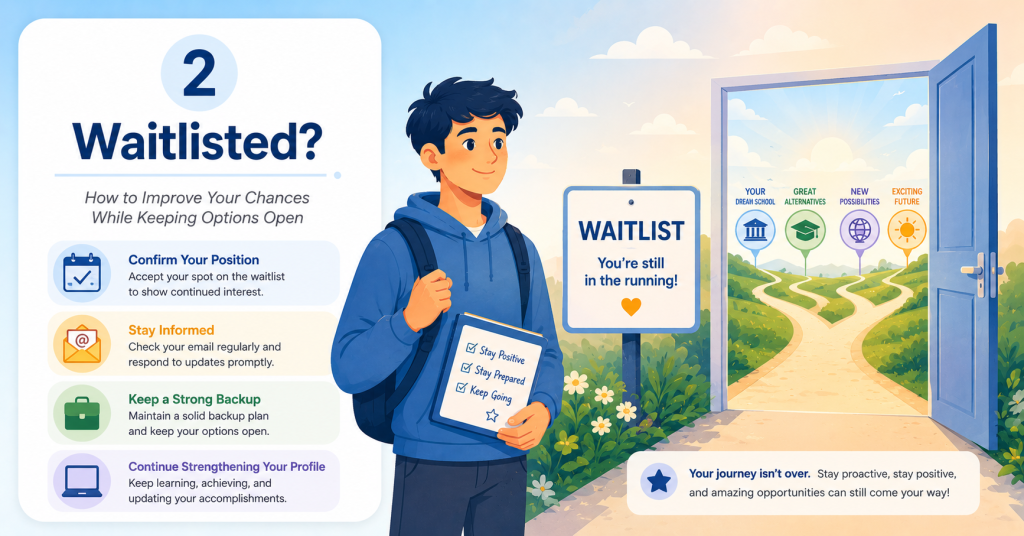
Waitlisted? Here’s How to Improve Your Chances While Keeping Options Open
Being placed on a waitlist can feel confusing because it is neither an acceptance nor a rejection. In university admissions, a waitlist means the university sees potential in your application but cannot immediately offer admission due to limited seats.
Many students mistakenly treat waitlists as a rejection and stop preparing other options. However, this is not the best approach. If you are waitlisted during the university admissions process, here are several strategies to strengthen your chances:
- Confirm your waitlist position – if the university requires students to accept their place on the list.
- Submit updates when allowed – such as improved grades, new achievements, updated test scores, or additional activities.
- Keep backup options active – by continuing with other university admissions offers or applications.
- Stay informed about deadlines – monitor any updates from the university.
It is also important to remain realistic. Waitlist movement in university admissions depends on factors such as enrollment numbers, accepted students declining offers, and program capacity. A waitlist is not a guarantee, but it is also not the end of a student’s opportunity. The best approach is to stay prepared while continuing to explore other pathways.

Multiple Acceptances? How to Choose the Best Letter of Acceptance (LoA)
Receiving more than one Letter of Acceptance (LoA) is exciting, but it can also make decision-making more difficult. After going through the university admissions process, many students assume they should simply choose the highest-ranked university. However, rankings should not be the only factor.
When comparing offers from university admissions results, consider these points:
- Program suitability – Does the major match your academic interests and career goals?
- Tuition and living costs – Compare total expenses, scholarships, and financial support.
- Location and environment – Consider the city, campus culture, and student life.
- Career opportunities – Look at internships, industry connections, and graduate outcomes.
- Support services – Review international student support, academic advising, and career centers.
It is also important to check whether the LoA includes conditions such as maintaining grades, submitting final documents, or meeting English-language requirements. University admissions are not only about getting accepted, but they are also about choosing the institution that best supports your plans. The “best” LoA is not always the most prestigious one. It is the offer that aligns with your goals, budget, and long-term success.

Still Waiting for an LoA? Smart Alternatives to Keep Your Study Plans Moving
Waiting for a Letter of Acceptance (LoA) can be stressful, especially when application timelines are uncertain. In the university admissions process, delayed results do not always mean rejection. Universities may still be reviewing applications, waiting for documents, or processing decisions.
While waiting for university admissions results, students should avoid putting all plans on hold. Instead, consider these alternatives to stay prepared:
- Apply to additional universities to expand your options and reduce risk.
- Explore different intake periods, such as Spring or Summer admissions if available.
- Consider foundation or pathway programs that can lead to full degree studies later.
- Improve supporting documents, including personal statements, portfolios, or recommendation letters.
- Strengthen test scores, such as IELTS, SAT, ACT, GRE, or GMAT to improve future university admissions opportunities.
Students can also use this waiting period to research scholarships, prepare financial documents, and plan visa requirements. University admissions do not always follow a single timeline. If an LoA has not arrived yet, it does not mean your study plans need to stop. Staying proactive and keeping alternative options open can help students move forward while waiting for the next opportunity.
University admissions are not only about receiving an offer. They are about making informed decisions and finding the right academic path that supports long-term goals. At eSTEP Global, we understand that students may need different kinds of support depending on where they are in their university admissions journey.
| Your Situation | Our Solution |
| For students facing rejection | eSTEP can help review application strategies, strengthen profiles, improve essays, and prepare for future admission cycles |
| For students on waitlists | eSTEP can assist with backup planning, additional applications, and test preparation to improve future opportunities. |
| For students with multiple LoAs | eSTEP can provide guidance in comparing universities, programs, costs, and study destinations. |
| For students still waiting for decisions | eSTEP can help explore alternative universities, pathway programs, IELTS preparation, SAT preparation, and admission planning. |
Ready to take the next step in your study abroad journey? Contact eSTEP Global today and let our team help you build the right strategy for your university admissions, test preparation, and future academic goals. Your next opportunity may be closer than you think.